Engineering & Installation of Tank & Hopper Weighing Systems
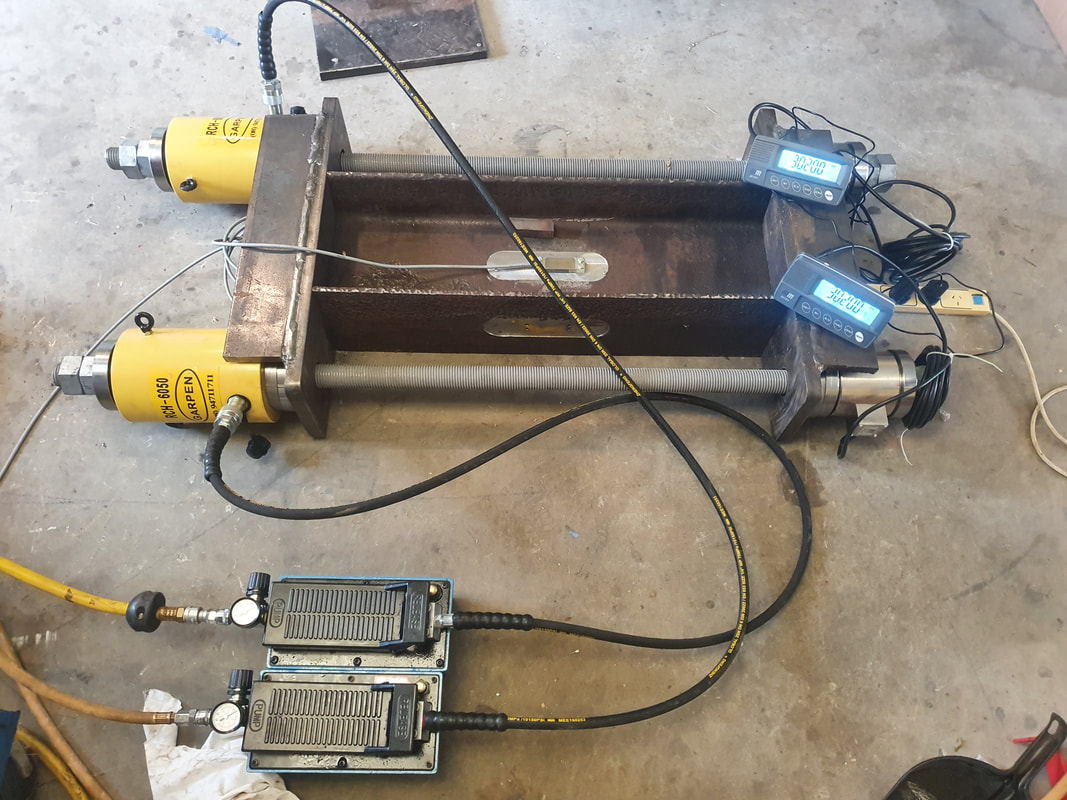
We design and install industrial weighing systems for tanks, hoppers and silos using bolt-on strain sensors, without lifting or modifying your structure. Unlike standard load cell installations, our approach begins with finite element analysis (FEA) of the supporting structure to understand how load is actually distributed across each column or leg before a single sensor is installed. We then design and fabricate a purpose-built calibration assembly specific to your installation, and calibrate each sensor individually before the system goes live.
Why Standard Bolt-On Sensor Systems Are Often Inaccurate
A common approach to hopper and tank weighing is to bolt a strain sensor to each column and assume each column carries an equal share of the total load. In practice this is rarely the case. Load distribution across columns is influenced by the stiffness of the ground below each footing. In Queensland, reactive clay soils undergo significant shrink-swell movement with seasonal moisture changes. During dry periods clay soils shrink and footings settle. During wet periods they swell and heave. This cyclic movement causes each column to carry a different proportion of the total load at any given time. Without FEA and individual sensor calibration, a bolt-on system will give a reading that drifts with the seasons and cannot be relied upon for accurate stock management or legal-for-trade purposes.
Purpose-Built Calibration Assemblies
Every installation requires a calibration assembly designed specifically for the column geometry, load range and access constraints of your site. We design and machine these assemblies in-house, allowing us to apply a known load to each individual sensor and verify its output before the system is commissioned. This is the only way to ensure the weighing system is accurate from day one and remains accurate over time

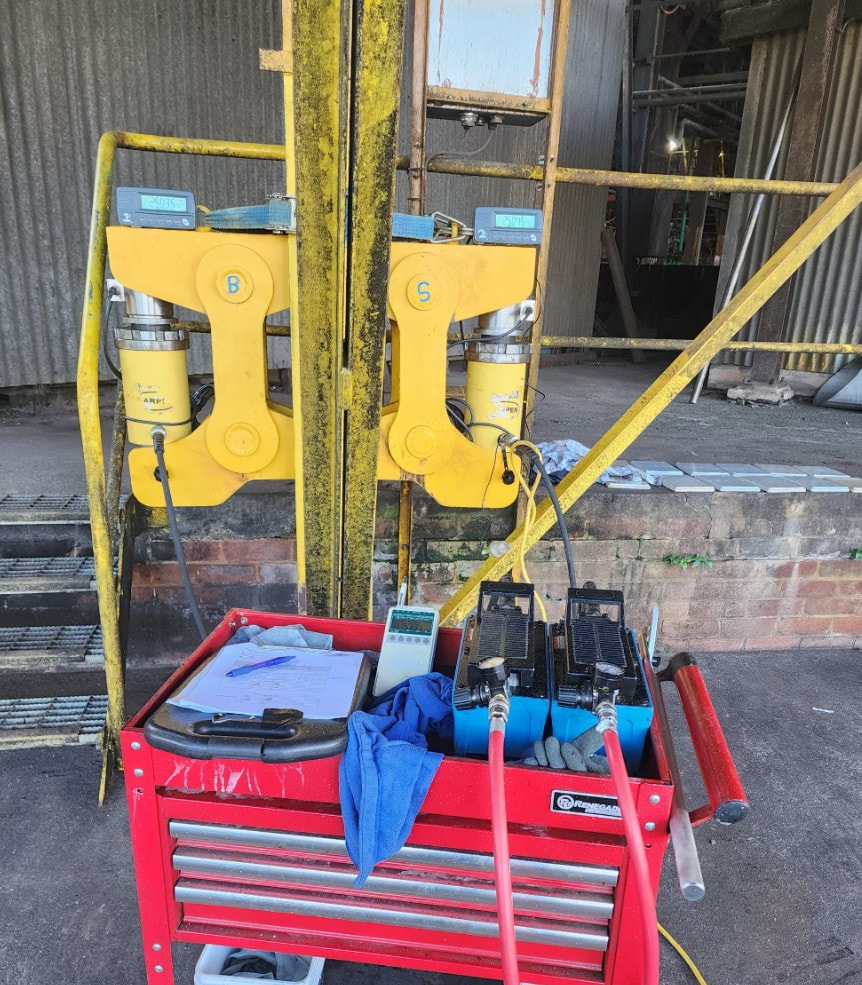
Installation of Weighing System on 1200 tonne Sugar Hopper