Core Drilling, Material Sampling & Structural Testing
We provide core drilling for concrete, timber, and steel to obtain samples for detailed structural testing and inspection.
To ensure high-quality sampling across different materials, we develop or source specialised tooling tailored to the
specific requirements of each project.
Some common reasons for core sampling are as follows:
To ensure high-quality sampling across different materials, we develop or source specialised tooling tailored to the
specific requirements of each project.
Some common reasons for core sampling are as follows:
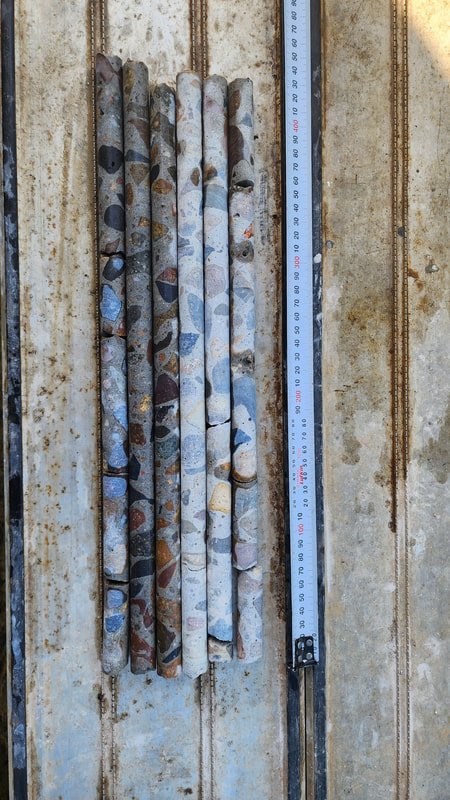
Concrete Core Sampling for Compressive Strength Testing
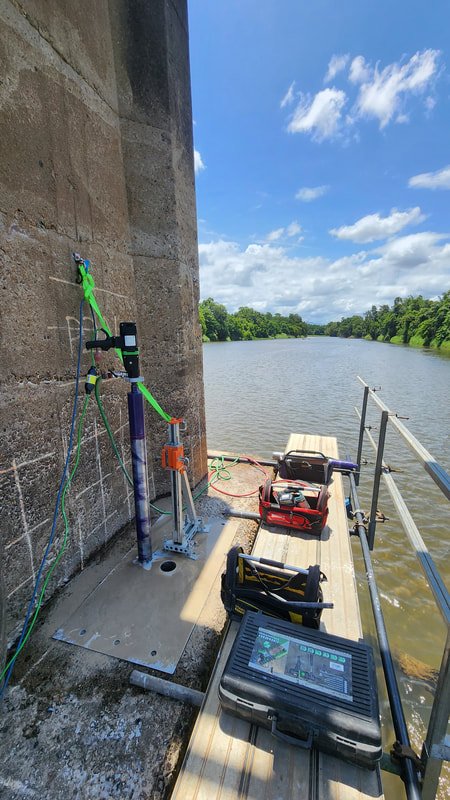
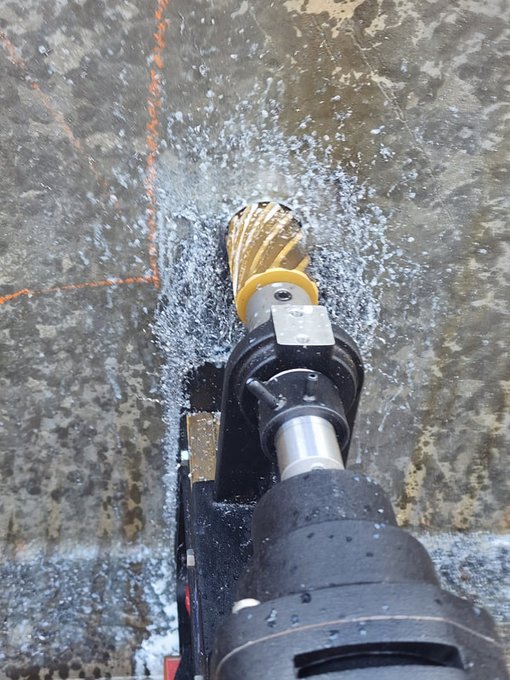
We use standard core drilling machines for most of our work, with the coring process being relatively straight forward.
Samples once removed are prepared further before being sent to a NATA-accredited laboratory for testing.
See our Concrete Inspection page for how we use compressive strength results in our assessments.
Samples once removed are prepared further before being sent to a NATA-accredited laboratory for testing.
See our Concrete Inspection page for how we use compressive strength results in our assessments.
Concrete Core Sampling for Alkali Silica Reaction & Aggregate Reactivity Testing
Alkali aggregate reaction (AAR) is a chemical process that causes concrete to expand and crack from the inside over time. The most common form in Australia is Alkali-silica reaction (ASR), where unstable silica in the aggregate reacts with alkalis in the cement. Left unmanaged it can cause severe structural issues.
Assessment starts with slicing and polishing core samples for petrographic examination of the aggregate, followed by laboratory testing to Australian Standards AS 1141.60.1 and AS 1141.60.2.
Results determine the extent of degradation and inform us on how to manage and plan.
Assessment starts with slicing and polishing core samples for petrographic examination of the aggregate, followed by laboratory testing to Australian Standards AS 1141.60.1 and AS 1141.60.2.
Results determine the extent of degradation and inform us on how to manage and plan.
Concrete Core Sampling for measurement of modulus of elasticity (Youngs Modulus)
The modulus of elasticity of concrete is a measure of its stiffness under load. It is a key input when converting strain measurements to stress. In existing structures the actual modulus can differ from design assumptions, particularly in older or deteriorated concrete. We extract cores and test them in accordance 1012.14:2018 and AS 1012.17,applying compressive load cycles to determine the stress-strain response. Results feed directly into our strain measurement analysis and structural engineering reports.
Steel core sampling for Metallurgical Analysis
We extract steel samples from existing structures for metallurgical analysis through a NATA-accredited laboratory. Testing confirms material grade and chemical composition to Australian Standards including AS 1391 for tensile testing and AS/NZS 3678 and AS/NZS 3679 for structural steel. This is particularly important for structural steelwork manufactured over the last 100 years, where material properties vary significantly between different eras of production and where assumptions about steel grade can lead to unsafe or overly conservative structural assessments. Where Steel NDT is also required, we engage an accredited provider to perform ultrasonic testing, magnetic particle inspection and visual inspection in accordance with AS 2207, AS 1171 and AS 3978.
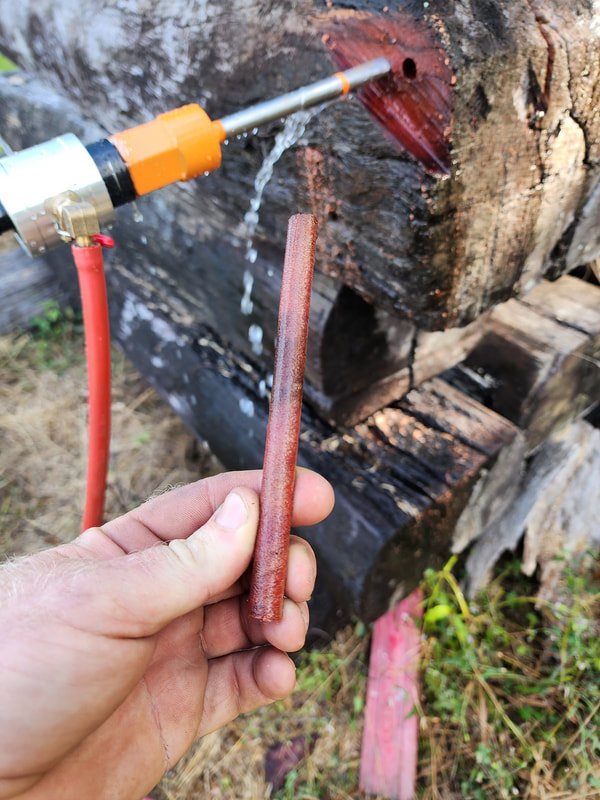
Timber core sampling for species identification and measurement of decay
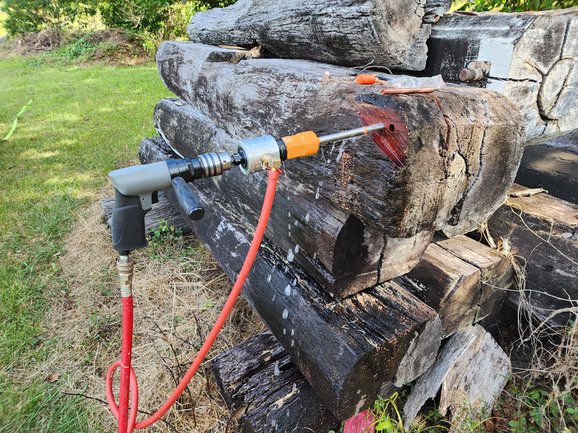
We extract timber cores using increment borers to identify species and measure decay without causing significant damage to the structure. Species identification is done through wood anatomy analysis, examining pore arrangement, growth rings and grain patterns under microscopy. This is important because the correct modulus of elasticity for a timber member depends on species. Where the species or grade of in-service timber is unknown, particularly in older structures, we also perform deflection testing to refine the modulus of elasticity. Samples are taken from heartwood where possible to avoid treated sapwood. Testing is carried out through NATA-accredited laboratories.